
Sub-Total: £0.00
Maintaining Your Air Pistol: Essential Cleaning & Care Tips (UK)
Last Updated: 11:25 Thursday 25th June 2026
Time to read: 6 minutes
Table of Contents
A True Marksman’s Tale: The Art of Maintaining Your Air Pistol
Let’s be completely honest: owning a premium air pistol and actually hitting your mark every single time are two sides of the same coin. Ask any seasoned shooter down at the range and they’ll tell you the exact same thing—the secret to stacking pellets in the bullseye isn’t just raw, natural talent. It’s discipline. And that discipline starts long before you pull the trigger, right at your workbench.
Caring for your pistol shouldn’t feel like a chore. Look at it instead as an essential ritual of the sport—a bit of kit mindfulness that guarantees your safety, coaxes out peak performance, and protects your hard-earned cash. A pristine air pistol is more than just a tool; it’s a direct reflection of your respect for the craft.
At Huntsman Sports, we live and breathe this stuff. We don’t just clear shelves of top-tier gear from the likes of Umarex,Glock, and Sig Sauer; we’re here to make sure you actually know how to run them. Consider this guide your professional blueprint to keeping your pistol running as smoothly as the day you unboxed it.
Part 1: The Basics: UK Law and Safety First
Before you even glance at a bottle of oil or a cleaning rod, we need to lay down the law. Literally. Responsible airgun ownership isn’t a pick-and-choose affair; it’s the non-negotiable bedrock of our community.
The “Make Safe” Habit
Every single time your pistol sits on the bench for a wipe-down, you follow this exact sequence. No shortcuts, no exceptions:
- Treat every gun as loaded. It’s the golden rule for a reason. Even if you know you emptied it five minutes ago, check it again.
- Clear the action. Pop the magazine out of multi-shot models, draw back the slide or bolt, and physically check the breech and barrel.
- Muzzle discipline matters. Keep the pistol pointed in a safe direction throughout—usually flat on the bench facing a solid wall or a dedicated backstop.
- Ignore the safety catch. It’s a mechanical part, and mechanical parts break, wear down, and fail. Rely on your fingers and your brain instead.
- Declutter your space. Work under bright, clean lighting. There is nothing worse than losing a tiny detent spring or a microscopic O-ring in a pile of workbench rubbish.
⚠️ A Quick Legal Reminder: Under UK law, leaving a cleaning pellet or a jammed projectile in the barrel technically means you are handling a “loaded” weapon. Always clear the bore entirely before you start tinkering.
Staying on the Right Side of the 6 ft-lbs Rule
The legal framework surrounding air pistols in the UK is incredibly strict. In England, Wales, and Northern Ireland, you can buy and own an air pistol without a Firearm Certificate (FAC) provided its muzzle energy stays firmly under 6 foot-pounds (6 ft-lbs). Push past that limit, and you are suddenly in possession of a section 5 prohibited weapon—a fast track to a mandatory prison sentence. (Keep in mind that Scotland operates on its own wavelength, requiring an Air Weapon Certificate for all airguns).
This legal cap is precisely why the replicas we stock at Huntsman Sports are built for precision target shooting and back-garden plinking, not high-power pest control.
Additionally, the age limits are clear-cut: you must be 18 or older to buy a pistol or its ammunition. Young shooters under 14 can still enjoy the sport, but only under the hawkish eye of someone over 21.
For more information on airsoft law, check out our article here.
Storage and Transport: Keeping it Locked Down

The law states you must take “reasonable precautions” to prevent anyone under 18 from getting their hands on your air weapon. Fail to do this, and you’re looking at a criminal record.
- At Home: Don’t just chuck it in a drawer. Invest in a sturdy, lockable cupboard or, better yet, a dedicated steel gun safe. Crucially, store your pistols out of sight and completely separate from your pellets and CO2 capsules. And keep them in the house—lockups and garden sheds are prime targets for thieves and breeding grounds for damp-induced rust.
- On the Move: When heading to the club, your pistol must be completely unloaded, uncocked, and slipped inside a securely zipped gun slip or hard case. Keep it in the boot, out of sight of prying eyes.
Part 2: The Universal Maintenance Routine
Different power plants require different technical care, but a few basic hygiene rules apply whether you shoot a modern replica or a traditional target pistol.
The 5-Minute Post-Shoot Wipe-Down
Every time you handle your gun, your skin leaves behind moisture, acids, and salts that actively eat away at metalwork. Make it a habit to give the gun a quick once-over before putting it away:
- For the Steel and Alloys: Use a microfibre cloth impregnated with a high-grade silicone or a specialized gun oil like Napier or Bisley. Wipe down the slide, outer barrel, and controls to form a barrier against moisture.
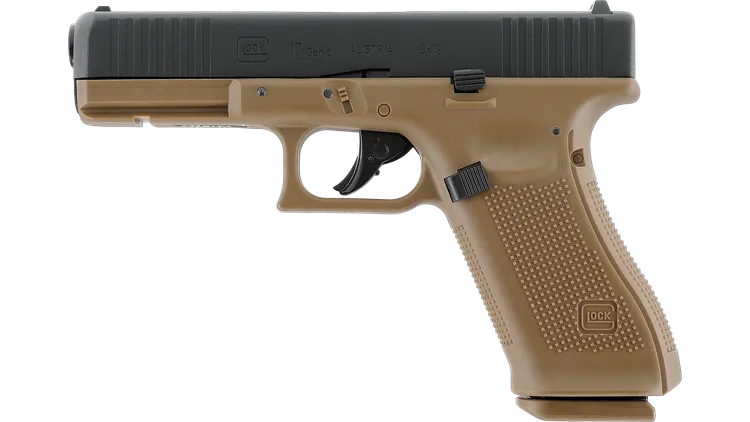
- For the Grips: If you’re running a synthetic polymer frame (like the Umarex Glock 17 Gen5), a simple wipe with a slightly damp cloth does the trick. Traditional timber grips need a little more love—dry them thoroughly and occasionally rub in a drop of Birchwood Casey Tru-Oil to keep the grain from drying out and cracking.
The Great Barrel Debate
If you ask five shooters how often you should clean an airgun barrel, you’ll get six different answers. Some obsess over it after every session; others haven’t touched a cleaning rod in a decade. Our take? Let your targets do the talking.
Unlike firearms, airguns don’t suffer from powder fouling, but they do experience lead buildup.
- The Brand-New Exception: Always clean the barrel of a brand-new gun before firing your first shot. Factory floors coat these barrels in thick, gooey transit grease to stop rust during overseas shipping. Fire a pellet through that, and you’ll bake the gunk into the rifling, destroying your accuracy out of the gate.
- The Routine: For day-to-day shooting, leave the barrel alone until your shot groups start opening up. If you’re suddenly throwing flyers when you normally hit the bullseye, it’s time to clean. For the average casual shooter, this happens roughly every 500 to 1,000 shots.
How to Clean a Pistol Bore Safely
When accuracy drops, avoid rigid steel cleaning rods—they can easily nick the crown or scratch the delicate rifling of an airgun barrel. Instead, opt for a flexible pull-through kit or a flexible cable system. The Abbey Airsoft Cleaning Wipes is an excellent and affordable option available at Huntsman Sports. Your kit should include:
- A cleaning rod (ideally brass or coated steel to protect the barrel’s rifling). A pull-through (a flexible cord) is often preferred for pistols.
- Cleaning patches or felt cleaning pellets (VFG is a well-regarded brand).
- An airgun-specific cleaning solvent or oil, such as those made by Napier or Abbey.
The Process (Pull-Through Method):
- Prep the Pull-Through: Thread a clean lint-free patch onto your cable loop and apply a couple of drops of dedicated airgun solvent (Abbey or Napier work brilliantly).
❌ Never use traditional firearm solvents like Hoppe’s No. 9. These formulas are designed to dissolve copper and carbon but will eat right through the synthetic rubber seals inside your air pistol. - Pull, Don’t Push: Feed the bare end of the cable from the breech end out through the muzzle, pulling the dirty patch through in the exact same direction the pellet travels.
- Repeat Until Clear: Swap out the dirty patches for fresh ones until they come out clean.
- Dry It Out: Finish by running a couple of completely dry patches through the bore.
- The “Dieseling” Warning: Leaving excess oil or solvent in the barrel or compression chamber is extremely dangerous. When the pistol is fired, the rapid air compression can heat this lubricant to its flashpoint, causing it to ignite in a small explosion known as “dieseling.” This violent event can produce a loud crack and a puff of smoke, and over time it will destroy your pistol’s piston seal and other internal components. Always ensure the barrel is dry after cleaning.
At-a-Glance Maintenance Schedule
To simplify these concepts, refer to the following table for a clear, routine maintenance plan.
| Task | Frequency | Recommended Tools & Supplies |
| Wipe Down Externals | After every use | Silicone Cloth, Quality Gun Oil (e.g., Napier, Bisley) |
| Inspect for Damage/Loose Screws | After every use | Visual Check, Appropriate Screwdriver/Allen Key Set |
| Deep Clean Barrel | When accuracy declines, or every 500-1000 shots | Cleaning Kit, Airgun Solvent, Patches/Felt Pellets |
| Lubricate Power Plant | Varies by type (see Section 3) | Specific Lubricants (e.g., Pellgun Oil, Silicone Oil) |
| Professional Service | Every 1-2 years of regular use | Contact a qualified gunsmith |
Part 3: The Specialist’s Touch — Power Plants
This is where things get specific. Lubricating an airgun is all about using the right product in the right place. Put the wrong oil in the wrong valve, and you’ll end up with a costly paperweight.
1. CO2 Replicas: Caring for the O-Rings
Action-packed blowback replicas like the Umarex Glock 17 Gen5 or the Legends P08 run on disposable 12g CO2 capsules. They are incredibly fun, but CO2 gas is freezing cold and dry as a bone. Every time you fire, it actively saps moisture from the internal rubber seals.
- The Routine: Before you puncture a fresh 12g capsule, place one single drop of Crosman Pellgun Oil or pure silicone oil right onto the pointed tip of the capsule.
- How it Works: When the piercing pin punches the metal cap, the rushing gas vaporizes the oil, carrying a fine mist through the entire valve system. It automatically lubricates the internal seals you can’t reach without a full strip-down.
- The Golden Rule: Never leave a pierced CO2 capsule sitting in your pistol for weeks on end. The continuous, high pressure will crush the face seal, permanently deforming it and causing a permanent leak. If you’re done shooting for the weekend, bleed the remaining gas off safely and take the capsule out.
This technique is essential for popular models like the ultra-realistic Umarex Glock 17 Gen5 CO2 Pistol to ensure their blowback action stays crisp and their gas efficiency is maintained.
2. PCP Pistols: Managing Extreme Pressure
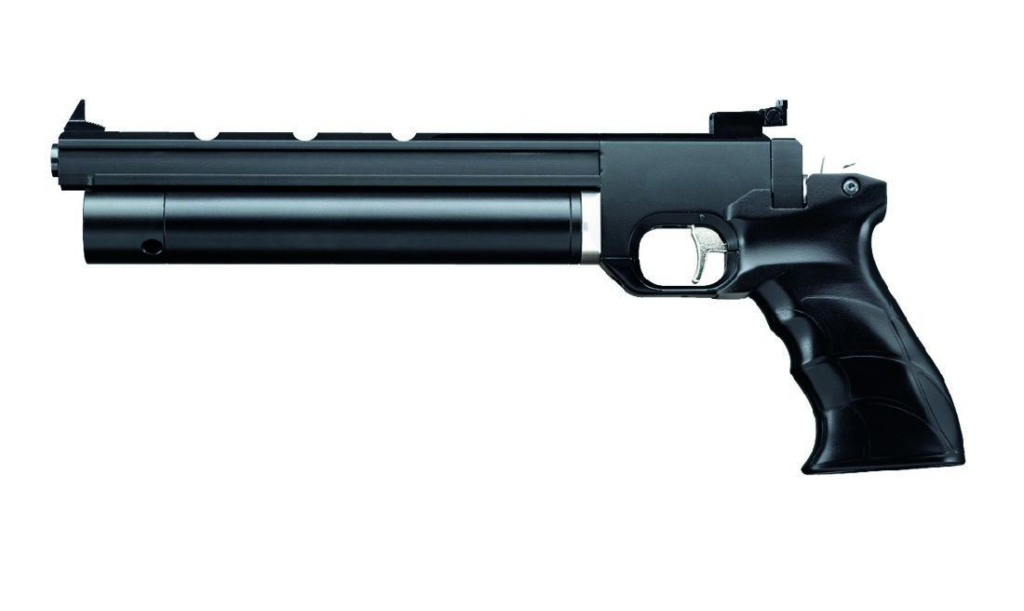
Pre-Charged Pneumatics (PCPs) like the Diana Stinger are the absolute pinnacle of target shooting accuracy, but their internal reservoirs hold air at up to 200 BAR. That kind of pressure demands massive respect.
- The Danger Zone: You must only ever use 100% pure silicone oil or grease on any part of a PCP that interacts with high-pressure air. Petroleum-based lubricants (like standard mineral motor oil or 3-in-1) can violently detonate under the heat of rapid compression.
- Where to Apply: Keep the tiny rubber O-rings on your fill probe lightly slicked with silicone grease so they slide effortlessly into the fill port without tearing. A microscopic smear on the bolt mechanism or pellet probe will keep the action feeling slick and tight.
- Storage Tip: Unlike CO2 guns, you should never store a PCP completely empty. Leave it with a partial charge—around 100 to 150 BAR—to keep enough positive pressure on the seals so they stay seated and don’t collapse or warp over time.
For example, proper maintenance is crucial for the Diana Stinger PCP. Correct lubrication of the fill probe and careful storage will ensure this great-value pistol provides years of reliable service.
3. Spring-Piston Pistols: The Mechanical Workhorses
Classic springers (and modern budget options like the Umarex DX17) are completely self-contained. They rely on heavy mechanical linkages rather than high-pressure gas valves, making them tough as old boots.
The Internals: Keep oils away from the compression chamber entirely. Modern springers use self-lubricating synthetic piston heads. If you pour oil down the air port thinking it needs a lube, you will cause catastrophic dieseling the next time you lock and load.
The Pivot Points: The main areas of wear on a break-barrel or underlever springer are the heavy-duty metal-on-metal joints. A dab of thick, high-pressure Molybdenum (Moly) grease on the barrel pivot pin keeps the cocking stroke buttery smooth and stops the metal from grinding away.
Air Pistol Lubrication Guide: The Right Lube for the Right Job
Using the wrong lubricant is the single most common and costly mistake an owner can make. This table provides a clear, unambiguous guide. Refer to it before applying any lubricant to your pistol.
| Pistol Type | Component | Recommended Lube | DO NOT USE |
| CO2 Pistol | CO2 Cartridge Tip / Piercing Seal | Crosman Pellgun Oil / 100% Silicone Oil | Petroleum-based oils (e.g., 3-in-1, motor oil) |
| PCP Pistol | Fill Probe O-Rings, Breech O-Rings | 100% Silicone Oil / Silicone Grease (e.g., Hill, Super-Lube) | Any petroleum-based oil (Danger of explosion) |
| PCP Pistol | Bolt / Cocking Linkage (metal-on-metal) | Molybdenum or Lithium Grease | Silicone Oil (insufficient lubrication for high friction) |
| Spring-Piston Pistol | Barrel Pivot Point / Cocking Linkage | Molybdenum or Lithium Grease | Thin oils that can migrate into the chamber |
| All Types | External Metalwork (for rust prevention) | Quality Gun Oil (e.g., Napier, Bisley) / Silicone Cloth | N/A |
Part 4: Long-Term Storage and Fault Finding
Packing It Away for Winter
If you’re packing your gear away for the colder months, spending ten minutes on prep now saves a massive headache come spring:
- De-gas completely if it’s a CO2 model. If it’s a PCP, make sure it has a healthy mid-level air charge.
- Give the metalwork a slightly heavier coat of oil than usual to protect against fluctuating humidity.
- Pop a silica gel pack inside your padded gun case to draw away any ambient moisture.
- Store the gun inside your home, away from damp outer walls or drafty radiators.
Troubleshooting Common Issues
Even well-maintained pistols can occasionally exhibit problems. This simple diagnostic table can help you identify and resolve common issues.
| Symptom | Possible Causes | Potential Solutions |
| Sudden drop in accuracy | Dirty barrel; Damaged pellet probe/breech seal; Loose scope/sight mounts; Using damaged or low-quality pellets. | 1. Clean the barrel thoroughly. 2. Visually inspect seals for nicks or damage. 3. Check that all mount screws are tight. 4. Try a fresh tin of high-quality pellets. |
| Loss of power / Low velocity | CO2/PCP: Low gas/air charge; Leaking seal. Springer: Worn or broken piston seal or mainspring. | 1. Install a fresh CO2 cartridge or recharge the PCP reservoir. 2. For leaks or springer issues, seek professional service. |
| Audible air leak | Failed O-ring or seal in the valve system. | Immediately and safely degas the pistol completely. Do not attempt to recharge it. The pistol requires professional service. |
| Jamming / Failure to load | Using damaged or incorrect size/shape pellets; Debris in the breech or magazine. | 1. Ensure you are using high-quality, undamaged pellets of the correct calibre. 2. Carefully inspect and clean the breech area and magazine. |
When to Call in the Experts
We’re all for DIY maintenance, but a wise marksman knows when they’re out of their depth. Do not attempt to take a dremel to a trigger mechanism, alter valve internals, or strip down a high-power mainspring without specialized spring compressors—those springs are under immense tension and can easily cause serious injury if they fly out.
It’s also worth dropping your pistol over a professional chronograph every year or so. Springs wear down and valves alter over time; checking the velocity ensures your pistol is performing flawlessly while staying completely legal and safely under the UK 6 ft-lbs limit.
The Takeaway
At the end of the day, an air pistol is a finely tuned machine. Treat it with a little respect, keep the right oils on the right seals, and it will reward you with crisp triggers, tight groups, and flawless reliability for years to come.
If you’re unsure about a leak, need to top up your cleaning kit, or want to pick up a fresh tin of match-grade pellets, don’t guess. Pop into Huntsman Sports or drop our team a message. We’ve got the gear, the workshop, and the expertise to keep your shooting sharp. Now, clean off that bench, prep your kit, and let’s get those groups shrinking.
Check out our articles on:
How to maintain your air pistol
Discover the top 5 air pistol FAQs in the UK
Discover the top 3 glock air pistols
Discover the best spring-powered air pistols
Discover the best PCP air pistols
How to choose your first air pistol
Discover the best air pistol for rats
How to improving air pistol accuracy
Discover the best air pistol scopes and sights


[…] How to maintain your air pistol […]