
Sub-Total: £0.00
Air Pistol Training: 5 Proven Drills to Master Marksmanship
Watch someone miss a driven pheasant or throw a shot wide at the 100-yard bench, and you can practically set your watch by the excuses. It was the gusting crosswind. A bad batch of factory cartridges. The wrong choke tube.
Hardly anyone ever blames their own right index finger.
The truth is, modern full-bore rifles and 12-bores let us get away with murder. The deafening bang and sharp kick act as an instant smokescreen, masking the flinch, snatched trigger, or dropped shoulder you committed a fraction of a second before ignition. You convince yourself the shot felt good because your shoulder took a beating.
If you want a brutally honest, completely unvarnished look at your actual technique, leave the big guns in the cabinet. Grab an air pistol instead.
Shooting a handgun well is notoriously unforgiving. Shrink your sight radius down to a few inches, strip away the recoil cushion, and suddenly every micro-flinch shows up in black and white on paper. Far from being a backyard toy, a well-engineered air pistol is marksmanship stripped down to its bare essentials.
Whether you want to keep your muscle memory sharp through the off-season, run cheap drills in the garden, or tidy up your trigger discipline, here is why a proper air pistol belongs in your armoury, and how to pick the right one for the job.
Staying on top of the laws is important, make sure you read this:
The Physics of the Short Sight Radius
Why does an air pistol humble even seasoned marksmen? It boils down to simple geometry and barrel time.
When you shoulder a sporting rifle, you are working with optic magnification or a sight radius that spans over two feet. A half-millimetre twitch at the muzzle barely matters downrange. Put that identical twitch into an air pistol, where your front blade and rear notch are separated by barely five inches, and that tiny wobble will throw you clean out of the bullseye.
| Platform | Sight Radius | Muzzle Twitch (0.5 mm) | Downrange Impact at 10m |
| Sporting Rifle | Long (approx. 60–75 cm) | Barely registered | Negligible deviation |
| Air Pistol | Ultra-Short (approx. 12–15 cm) | Instantly magnified | Misses the bullseye completely |
Then there is the issue of lock time. When you pull the trigger on a centrefire rifle, the bullet is gone in the blink of an eye. With an air pistol, the pellet ambles down the rifling at sub-sonic speeds. You have to stay locked onto the target long after the sear breaks. If you relax your wrist early or peek up to see where the shot landed, you’ve already ruined it.
Regular sessions with an air pistol force you to master four non-negotiable fundamentals:
- Trigger Disassociation: Pulling the trigger straight back along the bore axis without clenching the rest of your fingers or curling your thumb.
- Natural Point of Aim (NPA): Aligning your stance and skeleton with the target card so the sights settle on the bull naturally, rather than forcing the gun into place with tired shoulder muscles.
- Sight Alignment Over Target Focus: Keeping the front sight post pinned pin-sharp in the rear notch while accepting that the target downrange is going to be a soft blur.
- Pure Follow-Through: Keeping your sight picture and grip frozen for a full second after the shot releases.
Tidy up these four habits on a 10-metre card with an air pistol, and your rifle groups will tighten up on their own.
Powerplants: Which System Fits Your Routine?
Forget the clunky tin-can plinkers of the 1980s. Modern handguns fall into three distinct mechanical camps, each designed for different shooting goals:
Pre-Charged Pneumatic (PCP) Air Pistols
If you want pinpoint, match-grade accuracy, PCP is the pinnacle. Powered by a compressed air reservoir charged up to 200 bar, a PCP air pistol uses a light hammer to release a measured pulse of air. With no heavy spring slamming forward, the firing cycle is dead flat. The pellet leaves the barrel with zero fuss, and your sights never jump. For printing tiny groups on paper, nothing beats a PCP.
CO2 Air Pistols
Running on standard 12g capsules, a CO2 air pistol is built for speed and realistic handling. Available as crisp semi-autos and blowback replicas where the slide cycles with every shot, they let you run dynamic drills and fast double-taps without cocking between rounds. They do have an Achilles’ heel: fire them too quickly on a cold morning and the gas chills (the infamous “cool-down effect”), shaving off velocity. Keep a steady pace, though, and they are unmatched for action training.
Spring-Piston Air Pistols
The traditional break-barrel or over-lever spring air pistol is completely self-contained. No dive bottles, no hand pumps, and no gas capsules to keep buying. The catch? Physics. When the spring uncoils and the piston slams forward, it creates recoil before the pellet has even left the crown. To shoot one accurately, you have to adopt the classic “artillery hold”—cradling the gun loosely so it can recoil naturally. Strangle the grip, and your shots will scatter everywhere. It is the ultimate lie detector for erratic hand pressure.
Pellets or BBs: Picking the Right Ammunition
Before buying tins of ammunition, look at the barrel of your air pistol:
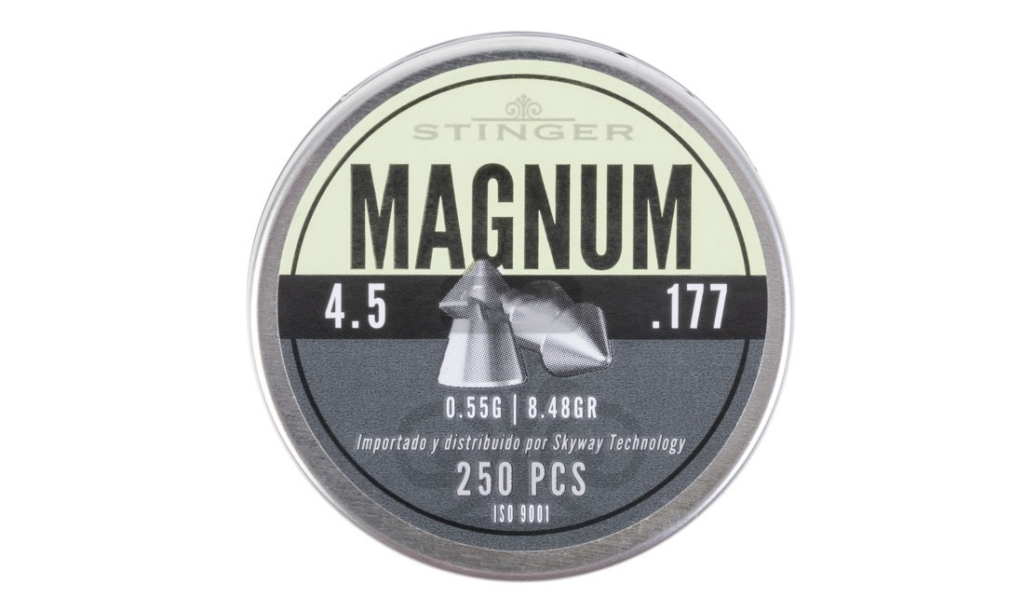
- .177 Lead Pellets (Flat-Head Wadcutters): The gold standard for precision. Wadcutters punch clean, cookie-cutter holes in card targets, making them easy to score. When paired with a rifled barrel, lead pellets give you the best aerodynamic stability and group sizes.
- .177 Steel BBs: Made for fast, reactive fun on tin cans and steel knock-down plates. BBs are built for smoothbore semi-automatics and speed-loaders. They don’t grip rifling like soft lead, so while you sacrifice benchrest accuracy, you gain fast-cycling reliability.
Staying on the Right Side of UK Law
Before turning your garden or outbuilding into a range, make sure your setup complies with British legislation:
- The 6 ft-lb Ceiling: Under the UK Firearms Act, any air pistol producing muzzle energy over 6 foot-pounds (8.14 Joules) is legally classed as a Section 5 prohibited weapon. Every pistol on the shelf at Huntsman Sports is factory-calibrated well within this legal limit.
- Boundary Laws: Under Section 16A of the Firearms Act (amended by the Violent Crime Reduction Act), letting a pellet or BB cross past your boundary fence is a criminal offence. Set up an oversized, impenetrable backstop—think thick paving slabs, railway sleepers, or commercial steel catchers fronted by heavy rubber matting.
- Safe Storage: When your air pistol is not in use, keep it locked away. The law requires you to take reasonable steps to prevent anyone under 18 from getting hold of it without adult supervision.
In-Stock Hardware: Top Picks from Huntsman Sports
All of these models are in stock and ready to view at our High Wycombe showroom, or available for direct delivery right to your door via our dedicated driver service.
1. AirmaX PP700S-A PCP Air Pistol (.177 / 4.5mm)
The Target Card Surgeon
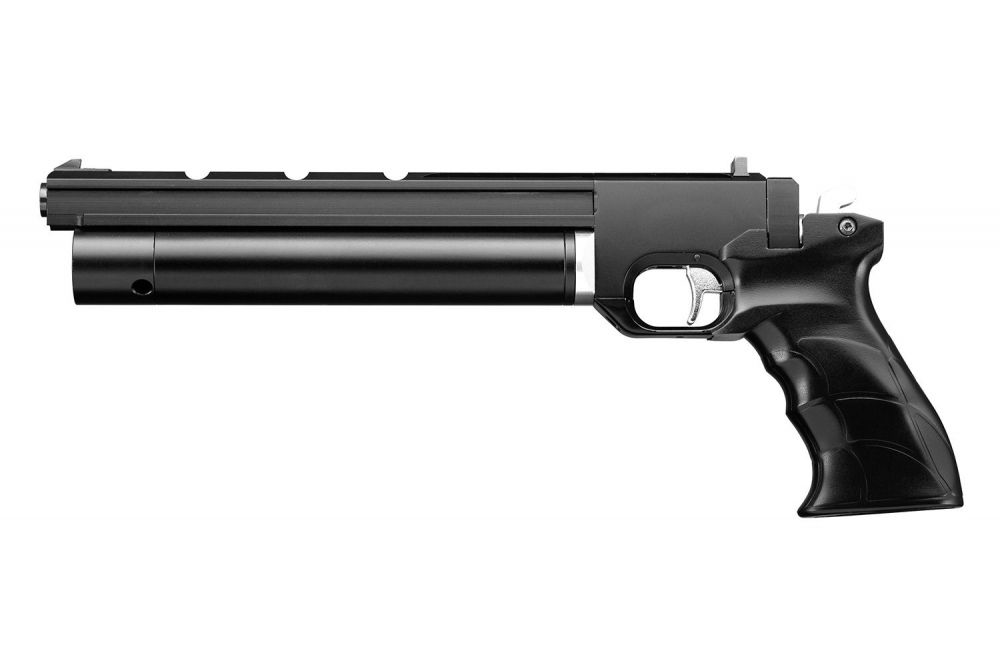
If you want benchrest precision without remortgaging the house for an Olympic rig, start here. The PP700S-A features an onboard 200-bar air cylinder, an internal regulator for rock-steady shot velocities, and a clever swinging-breech loading mechanism. Because it’s a completely recoilless PCP air pistol, the muzzle stays dead flat through the break. With an adjustable two-stage trigger, contoured grips, and an optics rail ready for a red dot or compact glass, this platform regularly turns out ragged, single-hole groups at 10 to 15 metres.
- Ideal for: Card scoring, benchrest practice, and recoilless target shooting.
2. Umarex Glock 17 Gen5 MOS Pellet Air Pistol (.177)
The Duty Gun Stand-in
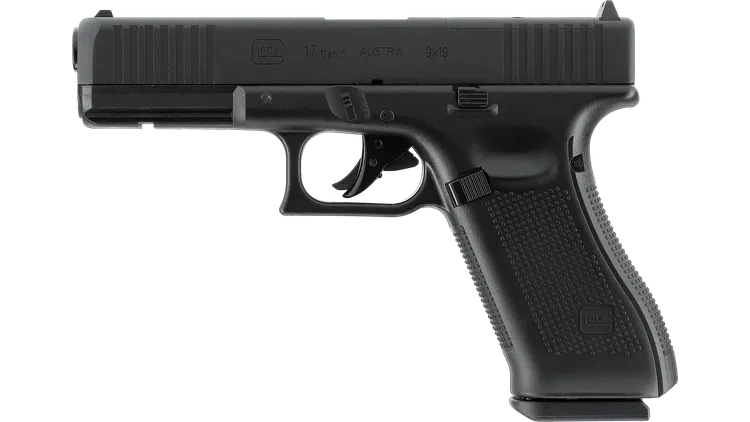
Most replica sidearms rattle out steel BBs, but this licensed Gen5 Glock fires .177 lead pellets through a rifled inner barrel. The real star of the show is the Modular Optic System (MOS) slide, which lets you mount miniature reflex sights. The blowback gives an authentic snap that forces your eyes to track the dot through recoil, teaching you to stay focused downrange on the target rather than squinting at the front blade. Best of all, the dimensions fit genuine duty holsters.
- Ideal for: Practical holster drills, optic training, and realistic cadence work.
3. Umarex UX BlaMer CO2 Blowback 1911 Air Pistol (.177 BB)
The Modern Tactical 1911
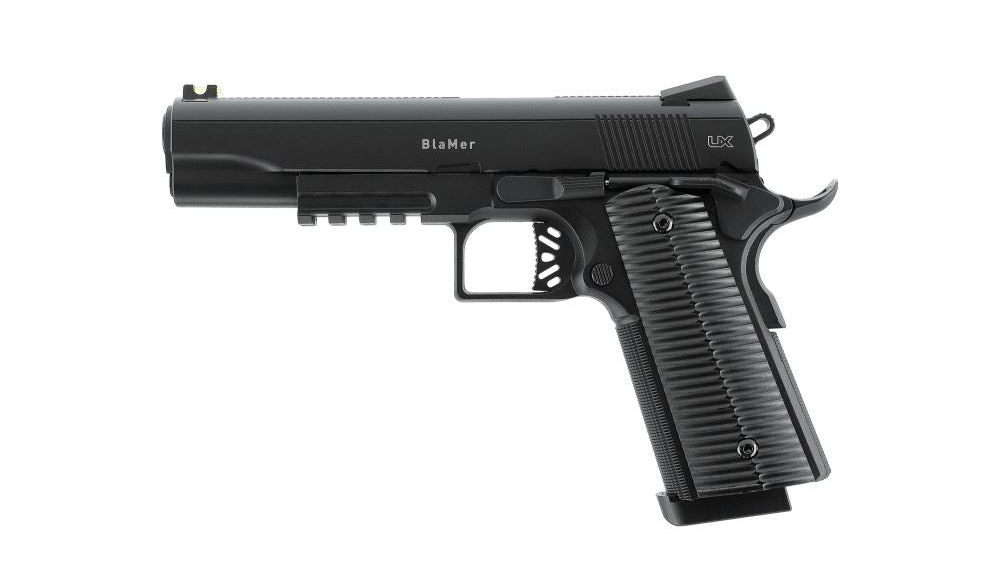
The BlaMer gives the classic 1911 outline a purposeful, modern makeover. Outfitted with a skeletonised hammer and trigger, high-profile combat sights, grippy textured scales, and an underside Picatinny rail for lights or lasers, it is built for dynamic drills. The blowback action cycles the metal slide with a clean, snappy impulse, making it an excellent air pistolfor running double-taps and speed presentations without spending a fortune on firearm ammunition.
- Ideal for: Tactical holster draws, light-mounted shooting, and fast shooting strings.
4. Borner Schofield CO2 Revolver (.177 Pellet & BB)
The Trigger-Control Coach
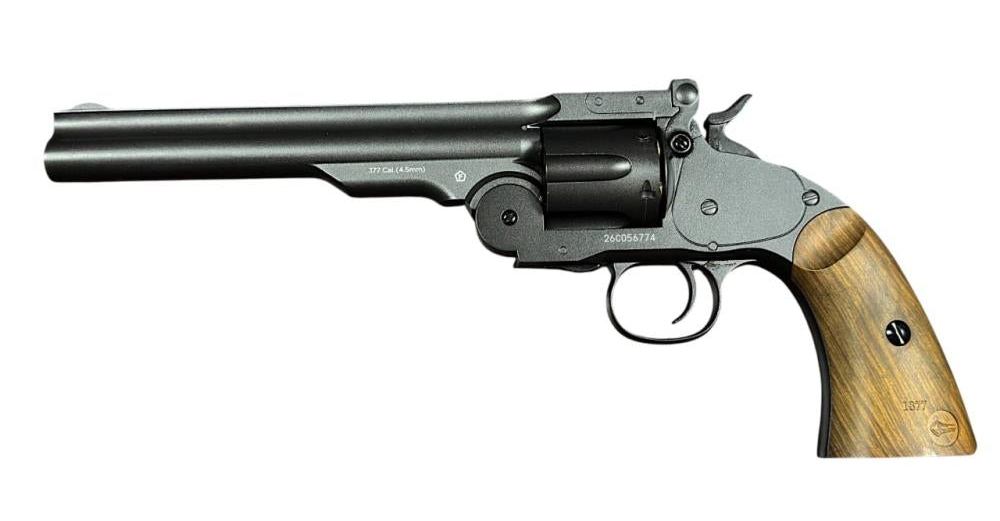
A full-metal tribute to the legendary top-break wheelgun, the Schofield is as useful for training as it is satisfying to look at. You seat each projectile into individual brass-effect dummy cartridges before slipping them into the cylinder. Cock the hammer, and you are rewarded with a light, crisp single-action break that immediately exposes any bad habits in your grip or trigger press.
- Ideal for: Classic revolver fans, deliberate single-action practice, and casual plinking.
5. Sig Sauer 1911 “We The People” CO2 Blowback (.177 BB)
The Forearm Workout
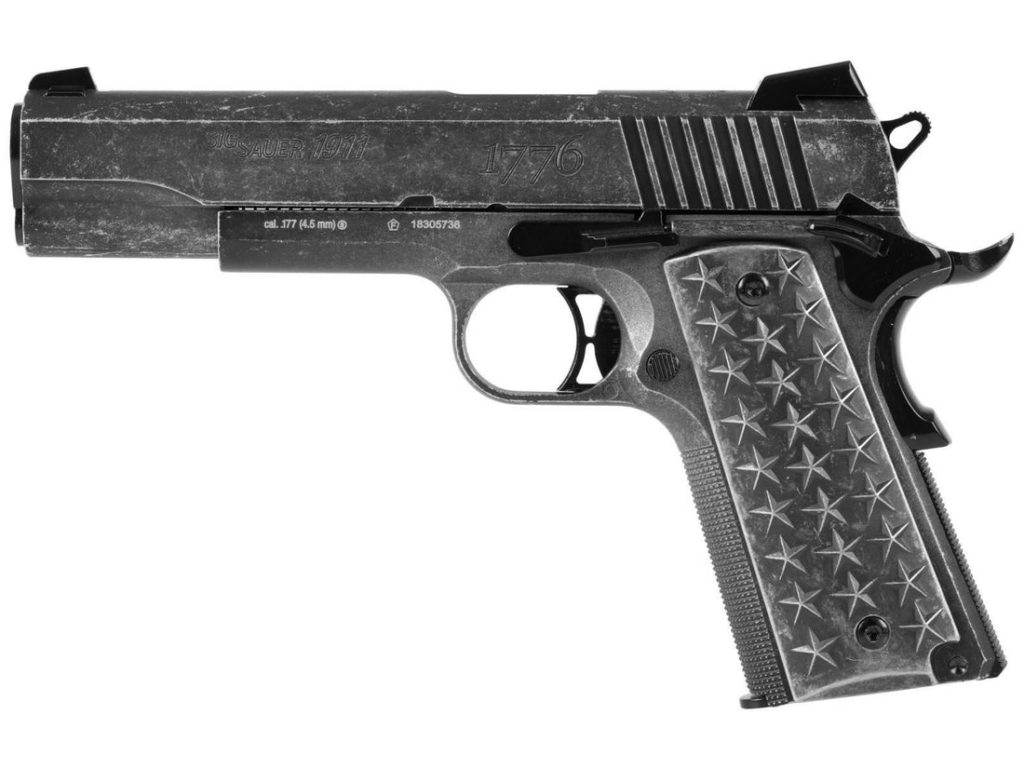
Sporting a custom distressed, battle-worn finish, this full-metal 1911 matches the genuine heft, functional grip safety, and manual thumb catch of the iconic service pistol. The heavy slide kicks with real authority, forcing you to maintain a steady, disciplined two-handed grip to get the sights back on target for follow-up shots. It provides a proper forearm and wrist workout while keeping your eyes sharp.
- Ideal for: Building grip stamina, recoil management, and collection displays.
Comparison: The Lineup at a Glance
| Model | Powerplant | Calibre & Ammo | Action Type | Best Application |
| AirmaX PP700S-A | Regulated PCP | .177 Pellet | Single-Shot Swinging Breech | Precision 10m target & benchrest |
| Umarex Glock 17 Gen5 MOS | 12g CO2 | .177 Pellet | Semi-Auto Blowback (Rifled) | Red-dot transitions & holster drills |
| Umarex UX BlaMer 1911 | 12g CO2 | .177 Steel BB | Semi-Auto Blowback | Rapid cadence & tactical training |
| Borner Schofield | 12g CO2 | .177 Pellet / BB | Single-Action Top-Break Revolver | Pure sear control & classic plinking |
| Sig Sauer 1911 WTP | 12g CO2 | .177 Steel BB | Semi-Auto Blowback | Full-weight recoil management |
The 15-Minute Garden Range Routine
Mindlessly shooting tin cans burns through gas, but it won’t fix your shooting mechanics. If you want genuine progress, run this structured 15-minute training block twice a week:
Phase 1: Blank Wall Dry-Fire (5 Minutes / 15 Cycles)
Double-check that your air pistol is completely clear and unloaded. Face a plain, featureless wall about two metres away. Bring the pistol up, align your sights against the blank background, and squeeze the trigger. Without a target to distract you, your focus stays entirely on the front blade. If that front post dips, jumps, or twitches when the sear breaks, you are yanking the trigger. Repeat until the sight post stays completely frozen through the click.
Phase 2: The 1-Inch Target Card (5 Minutes / 10 Live Shots)
Pin up a target card at 10 metres. Work through a slow, progressive four-second trigger squeeze: one, two, three, four. The shot should break smoothly during that count without you forcing the exact millisecond of release. If you find yourself rushing the break, take your finger off the blade, breathe, and reset.
Phase 3: The Blind Follow-Through (5 Minutes / 5 Live Shots)
Build your stance, align your sights on the bullseye, close your eyes, breathe out, and take the shot. Open your eyes immediately after the break. Where are the sights pointing? If they have drifted off-centre, your body was muscling the gun onto target instead of relying on a solid Natural Point of Aim. Adjust your feet, not your arms, and try again.
Want to sharpen your training skills? Checkout some air pistol training classes:
https://www.nsra.co.uk/get-started-with-air-pistol
Time to Step Up to the Line
An air pistol isn’t something you outgrow once you pick up a rifle or shotgun; it’s the training tool you come back to whenever your mechanics need a reset.
By stripping out deafening muzzle blast, sore shoulders, and costly club range fees, it leaves you alone with your technique. Commit to a couple of short sessions a week in the garden or outbuilding, and you will see the payoff next time you uncase your primary sporting gun.
Ready to sharpen your shooting? Browse Huntsman Sports’ complete range of PCP and CO2 air pistols online today, or visit our showroom in High Wycombe to get one in your hands and find the right fit.

